
TL;DR: Every week another prompt goes viral on LinkedIn, Threads, and X, one that turns a chatbot into a job-search bot, sweeping the job boards every morning and handing you a triaged list of roles. The tactic works. It also solves the wrong half of the problem. Finding open roles was never the bottleneck. Keeping the thread across a months-long search is, and a bot that finds you sixty new roles a week makes that harder, not easier.
You’re not bad at this. If your search has dragged into its third or fourth month, if you’ve lost count of what you applied to, if you keep being told to just automate the whole thing and it’s still not working, that’s not a verdict on you. Searches take months now, the market got slower and louder at the same time, and the loudest advice in your feed is quietly making it worse. It’s the market, not you.
You’ve seen that advice. Every morning a post on LinkedIn or Threads goes viral: a prompt that turns a chatbot into a job-search bot, sweeping the boards while you sleep and handing you sixty fresh roles by breakfast. Never search a job board by hand again. It racks up likes because the promise is intoxicating. It’s also the wrong tool for the part that’s actually hard, and it’s worth sixty seconds to see why before you hand it your search.
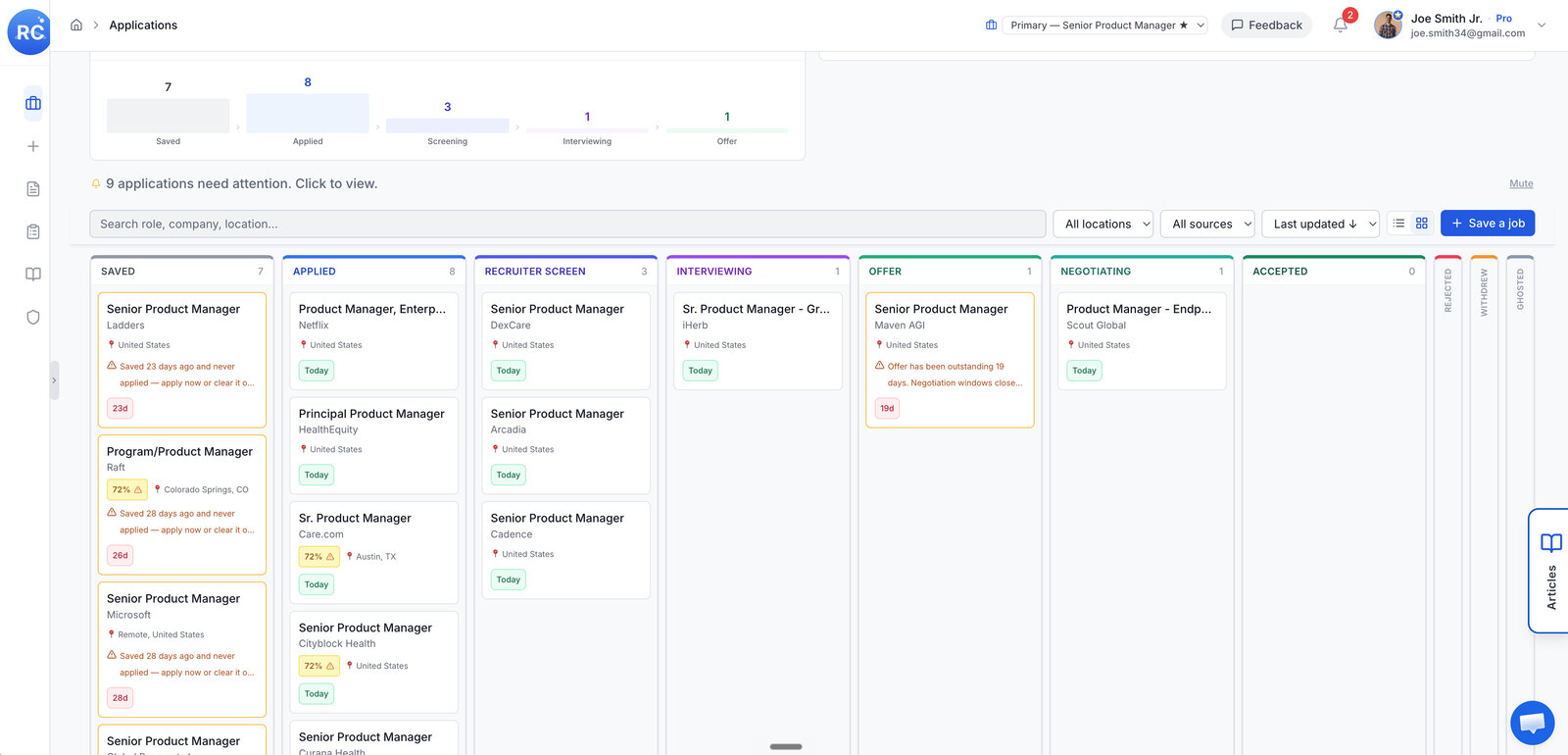
The real fix is almost boring. Capture every role you actually want in one click, watch them line up on a single board from applied to offer, and always know which ones have gone quiet. That’s the whole payoff, and it looks like this:
First, though, the honest case for the bot, because part of it genuinely works, and that’s exactly what makes it a trap. The promise is a daily sweep of everything: LinkedIn, Google Jobs, every company career page. The half that actually holds up is the public boards. A prompt, or even a plain Google search, really does pull open roles off Greenhouse, Lever, and Ashby, often before the people scrolling LinkedIn ever see them. The trick is no secret. You point Google straight at the boards:
site:boards.greenhouse.io “your job title” “your city”
Swap in your role and location, aim it at Lever or Ashby too, and you have most of what the bot does. The LinkedIn half, though, is mostly theater. LinkedIn is login-walled and blocks automated tools, so a chatbot can’t reliably scrape it, and what comes back is thinner and patchier than the tidy screenshot everyone’s posting. So take the half that actually works, the public boards, and skip the rest. Even at its best, it only solves finding.
None of this is even new. Job boards have emailed daily alerts for twenty years. Aggregators, RSS digests, saved searches: finding open roles has been a free, plentiful commodity for as long as there have been job boards to search. The chatbot version is just a nicer wrapper on a problem that was cheaply solved a long time ago. Finding open roles was never the bottleneck. And finding a random one you have no connection to, no relationship, no one on the inside who’ll put in a word, was never the hard part either.
But watch what actually happens two weeks in.
The bottleneck was never finding roles
Run one of these daily searches for fourteen days and give the bot every benefit of the doubt: say it dedups cleanly and filters out the junk. You still don’t get a shortlist. You get a pile. Sixty, seventy roles in a tidy list, because the tidy list is the easy part. The hard part is everything a list can’t hold.
The work was never finding the jobs. It’s keeping track of them. Which of these did I apply to? Which did I tailor a resume for, and which got the generic version at 11pm? Did the fintech startup reply, or am I about to apply twice?
A bot can refresh the list every morning. Could you keep bolting onto it until it tracks all that too, a spreadsheet here, a status column there? Sure. But then you have built yourself a second job, babysitting a fragile personal tool on the side of the actual search, and most people never do. So the tracking just lives in your head.
That’s the wall, and it hits a couple dozen applications in, not because you ran out of jobs but because they blur together. You re-apply where you already tried, you let the close ones go quiet, and you burn your best energy on discovery, the easy part, with nothing left for the part that decides outcomes.
And it’s not a two-week sprint. A real search now runs for months, ten or fifteen live conversations at different stages, each one moving while the bot dumps forty more roles on top. Human working memory taps out long before you’ve kept that many straight.
A daily search finds them. It doesn’t keep the thread.
What you need is the opposite of a firehose: a place where each role you care about has a home, holds its status, and stays put while the noise scrolls past. Somewhere you can see at a glance what’s in flight, what’s stalled, and what’s worth your energy this week. That’s continuity, and it’s what carries a search from a motivated first week to an exhausted fourth month without roles slipping through the cracks.
The auto-apply version doesn’t fix this. It severs it.
The next turn of this trend is already here: tools that don’t just find roles but submit for you, a tailored resume and cover letter attached, dozens or hundreds at a time. Some even run a “stealth” mode that mimics a real person clicking, so the job sites can’t flag the automation. Discovery turned all the way up, then press send.
It’s the same mistake with the volume dial maxed out. A bot that applies to a hundred jobs doesn’t keep your thread. It cuts it. You can’t remember where you stand with a company you never chose to apply to: you didn’t read the role, didn’t weigh the fit, didn’t decide it was worth your name.
And it shows on the receiving end. An application the system generated, that you never read and never chose, arrives generic and slightly off, and it reads as exactly what it is. Low effort gets screened out fast.
Volume was never the thing that got someone hired. It’s just the thing that’s easy to sell.
And you’re not the only one with a bot. Point the same automation at the same listings, and a single opening now pulls hundreds of applications in a day, often past a thousand.
The recruiter didn’t get better candidates. They got a bigger haystack. So they lean harder on the filters, and the filters reward the one thing a bot can fake: keyword-match to the job description.
But keyword-matched isn’t qualified. The pile fills with resumes that look aligned on paper and fall apart on a read. Yours is in there somewhere, fired off by the same tool as everyone else’s, indistinguishable.
Spray and pray doesn’t beat the flood. It’s the flood.
What actually compounds
You could build a version of this yourself: bolt tracking onto the bot, keep the spreadsheet alive, wire up your own reminders. But why, when the capable version already exists? We build Resumes Coach for exactly this half of the problem.
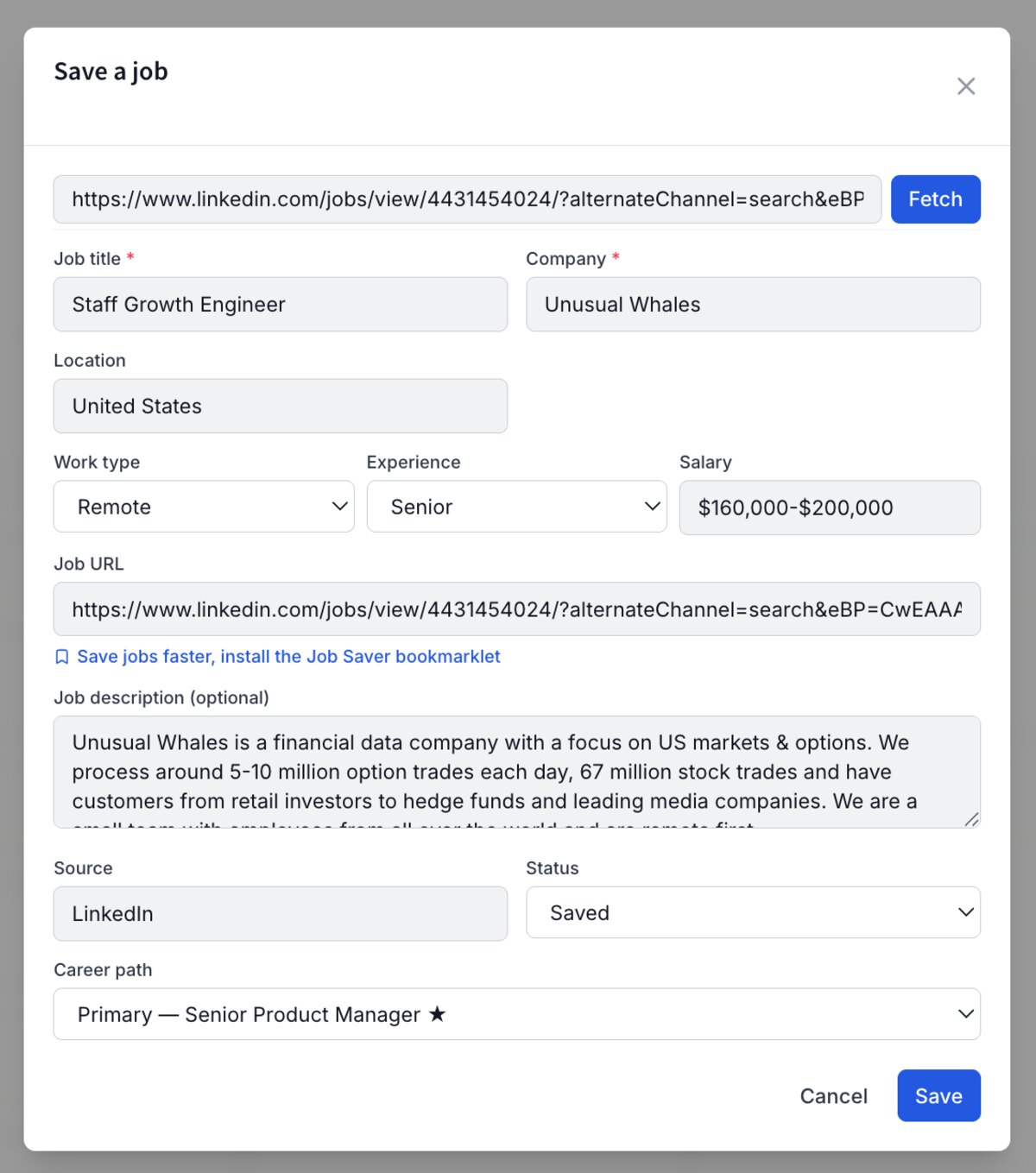
Capture in one click. When you find a role worth pursuing, wherever you found it, you save it straight from the job posting with a browser button. No copy-paste, no retyping the company and title into a spreadsheet. The role and its description come with it, so the thread starts the moment you decide it’s worth keeping. (How one-click capture works.)
A board that holds the state. Every role you capture lands on a pipeline you can see: applied, interviewing, waiting, closed. The one at the fintech startup has a card. You know you applied. You know they haven’t replied. You know it’s been eleven days. The close one from three weeks ago isn’t buried in a scroll, it’s sitting in its column where you left it. (Why the job-search spreadsheet always dies.)
Fit, per role. Instead of firing the same resume at everything, you see how each version actually matches the job in front of you, and where it falls short, so the roles worth tailoring for get the tailoring and the long shots don’t eat your evening. That’s a job-match score read against the specific role, not a generic grade. (How to tailor without spending hours.)
None of these pieces is new on its own, and plenty of tools do one or another. The win is running the whole thing in one place: apply to the roles that actually match, with a resume optimized for each, and keep the thread on every one. The same way every week, at low effort but never low quality.
The bot is the loud part
A list of sixty fresh roles looks like progress, which is why the automate-your-search posts go viral. But most of what moves a search is quieter, and much of it happens before anyone even replies. You send a few genuinely-fit applications a day, each with a resume tailored to the role, instead of blasting all sixty with one generic version. You follow up on the one that went silent before it quietly dies. You keep the close match from getting buried under tomorrow’s forty new listings.
So if you’re not even getting a screener, more volume won’t fix it, however good the prompt is. The problem is upstream, and the first job is seeing where.
Line up your applications and what came of each, and the pattern shows itself. No replies at all usually points at the resume or the targeting. Interviews that stall after a round point somewhere else, the role moving on, or how the interview went. Those are opposite problems with opposite fixes, and you can’t tell them apart from a pile you’ve lost track of.
That’s the real job of a tracker, and it’s more than a status list: every application travels with the exact resume you tailored for it, so what you sent and what came of it stay joined. That coupling is what makes the pattern legible, and lets you fix the step that’s failing instead of firing off more of the same.
Want to run your search instead of losing the thread? Open the tracker in Resumes Coach →. Capture the roles that fit, tailor a resume to each, and see where your search is actually stalling.